Friday, November 15, 2013

JPII and TMIY

A Catholic ministry that I have come to greatly respect comes to us out of the Lone Star State from a former energy derivatives trader, Steve Bollman. In the great jubilee year of 2000, he heard a call from God to found "Paradisus Dei", a lay ministry that serves as an umbrella organization for the program I am involved in, "That Man is You". It integrates faith and reason by incorporating the authentic teaching tradition of the Church with science and statistics. Blessed John Paul II, Pope Leo XIII, St. John Chrysostom, St. Iranaeus and many others are regularly referred to when considering male leadership in four distinct roles: morality, spiritual combat, economic stability, and political integrity. Far from being a strictly American or Texan approach to faith, Steve Bollman gets at the heart of the Universal Church by identifying Christ as the standard of virtue and perfection throughout history, including the Old Covenant pre-figurement of Christ in David, God's anointed king.

The first year of the program encourages husbands and fathers to become "men after God's own heart". David himself received this description, even with tremendous responsibility and temptation. He did, in fact, sin grievously--only to repent of his wrongdoing and accept the consequences of his actions. Therefore, besides the four leadership roles listed above, TMIY identifies five leadership traits to accompany the roles:

1)personal responsibility for one's actions
2)develop clarity of thought
3)maintain integrity of action
4)lay a foundation for the future
5)pay the necessary price

Reinforced by the writings of saints and church fathers (see above) as well as statistics and science necessitating the need for contemporary improvement, the program gives men a chance to hear God's continuous call on their lives and consequently discuss appropriate responses in small groups afterward.

Year two, my current course, is entitled, "Light to the Nations" and focuses in on the family. It draws from JPII's writings on the family as "placed at the heart of the great struggle between good and evil, between life and death and between love and all that is opposed to love” (Pope John Paul II, Letter to Families, #23). Likewise, he called the family the "domestic church" and the "nucleus through which passes all of human history". The timing of this course could not be better for me, as I begin raising my son at the start of my second year of marriage! Indeed, TMIY is timely for many parishes throughout the United States and is recently expanding to pilgrimages in France and Italy.

Speaking of Europe, Steve Bollman does not neglect the effects of 19th & 20th century philosophy on modern thinking. Readily accessible in JPII's Theology of the Body, Steve identifies Freud, Nietzsche, and Marx as the three european architects of the "culture of death" and masters of suspicion. Their influence still plagues the legislation, prejudices, and ideologies of western thought today. In direct contrast to such ideologies, JPII calls for a "civilization of love", the most basic unit of which is the family.

Inarguably, the family is the battleground for either succumbing to the "culture of death" or truly embodying the "domestic church". TMIY's emphasis on male leadership (particularly that of a 'father who is rich in mercy') is much needed throughout the Church to bring about authentic images of Trinitarian communion in marriage and family life. Thankfully, Steve himself and Blessed John Paul II serve/served as excellent examples of 'fathers who are rich in mercy'.

Friday, November 1, 2013

JPII vs. the Da Vinci Code

As promised, the follow up to mentioning Dan Brown's Da Vinci Code in the light of Blessed John Paul II is here! With full awareness that Brown's work deserves no refutation on account of its sheer errancy, I am compelled to refute it anyway because of the damage it has done to the faith of loved ones. Not to mention its popularity at the time of its publication, topping the Bible, proves that it must be dealt with, since it was not dealt with in my parish or education. As always, JPII's writings come in very handy, as does the general understanding of Christ as Bridegroom of the Church.

That said, I will outline the two main errors with Brown's magnum opus and the popular evidence in support of his claims:
1) He claims the grail legend points to Mary Magdalene as the grail (Holy Blood and Holy Grail, Messianic Legacy, Da Vinci's "Last Supper")
2) Jesus was not a celibate rabbi (Last Temptation of Christ, Freemasonry, From Ritual to Romance, The Golden Bough)

Since JPII has not published directly against Brown's publication, what he does have at my disposal for refutation of the above are the following:
1) General Audience of December 11, 1991 "Jesus as Bridegroom"
2) General Audience of July 17, 1993 "Apostolic Celibacy"

The questions worth asking are: Did Jesus die and rise at all? Since he did, was it because he was a political leader with a family or the Lamb of God who takes away the sins of the world? Has the Church been proclaiming truth about Jesus' celibacy for two millenia, or just controlling the paternity and Apostolic Succession of the Church? Was Jesus more like the Son of God, or just a son of David? Who was the beloved disciple of Jesus, is he the same as who the Bible says he was, namely, John?

I think that for most uncatechized Catholics, these are questions that cannot be answered by the Da Vinci Code alone. In other words, like Dostoyevsky's Grand Inquisitor in its own day, Da Vinci Code will more or less strangle the seed of faith in any average parishioner. Why is that? And is JPII partially to blame for not seeing this attack on the faith? Based on his writings, as I said with the abuse crisis in an earlier post, he informed the faithful of "the one thing necessary" on a weekly basis! His catechesis was specifically geared toward a clearer understanding of sexuality in light of the Gospel of life, both celibacy and marriage alike.

Why such confusion? For one thing, the internet has made information, both accurate and inaccurate, readily accessible. For every one valid document, there may be a handful of "tabloid"-type documents. The Da Vinci Code is exactly that, with the headline reading "Jesus' Secret History Discovered!" or "The Search for the Holy Grail Found in Mary Magdalene!". After all, what has more shock value nowadays: traditional logic and eye-witness testimony, or outrageous hearsay?!

Further proof of Jesus' celibacy can be verifed by his cousin John the Baptist, as recorded by JPII, Josephus (Antiquities of the Jews), and the Gospels:
1) He wore camel's hair, lived in the desert, and ate locusts
2) He was a celibate jew, trained by the Essenes(also celibate)
3) He took a nazirite vow(no shaving, strong drink or contact with death)
4) He identified Jesus as the "Lamb of God who takes away sins"
The life of John the Baptist fills in a few unspoken facts about Jesus' celibacy, explaining the heart of the question brought up by Brown's book:

*Although rare and very unpopular, Jesus was not the only celibate jew (Jeremiah, Daniel, and John were too according to Scripture)

As JPII's General Audience of 12/11/91 reiterates, John the Baptist played a very crucial role in announcing Jesus as "Bridegroom" and "Lamb of God". St. John the Baptist says in Jn. 3:29-30:

I am not the Christ, but I have been sent before him. He who has the bride is the bridegroom; the friend of the bridegroom, who stands and hears him, rejoices greatly at the bridegroom's voice; therefore this joy of mine is now full. He must increase, but I must decrease (RSV)

Needless to say, the "bride" John the Baptist is referring to is not Mary Magdalene. Jesus calls himself the "Bridegroom" in Mt 9:15 in direct connection with the messiah of Israel, whom John the Baptist says he himself is not. Therefore, since the disciples of John the Baptist thought that perhaps he was the messiah--or bridegroom-- of Israel and he insisted on Jesus instead, then Jesus is precisely the Bridegroom of Israel and not of any isolated woman. In other words, Jesus is the Bridegroom of Israel/Church/People of God/Ekklesia!

As simple as what the above concludes to be true, the Da Vinci Code concludes otherwise and with a lot more esoteric and convoluted information. On a certain level, it does require faith to see Jesus as the messiah and Bridegroom. After all, many of his contemporaries missed the boat. But reason can also help us to realize that JPII, the Bible, and Church Tradition are more reliable than Dan Brown's 'shock value' references.

In fact, in the person of the Pope--the Vicar of Christ--we have a celibate man intent on following the life of Jesus in all of its authenticity. What authenticity does Dan Brown's life follow--Robert Langdon, a fictional symbologist of Harvard?

Two final points to clear up speculation on Brown's "anti-thesis": Jesus' own words on celibacy, and the legend of the grail in classic literature.
The first of the two points needs no explanation, the Scriptural account in Matthew's Gospel speaks for itself:

10 The disciples said to him, "If such is the case of a man with his wife, it is not expedient to marry." 11 But he said to them, "Not all men can receive this saying, but only those to whom it is given. 12 For there are eunuchs who have been so from birth, and there are eunuchs who have been made eunuchs by men, and there are eunuchs who have made themselves eunuchs for the sake of the kingdom of heaven. He who is able to receive this, let him receive it." (Mt. 19, RSV)

The second of the two points concerns a pair of long-held interpretations of the grail legend besides that of the conspiracy theorists, namely, the authors of Holy Blood... and Da Vinci Code. The pair hinges on Joseph of Arimathea and St Lawrence the Martyr. The BBC has this to say about Joseph:

The legend states that Joseph of Arimathea became a missionary after the death of Jesus and was eventually sent to England to preach the Gospel. He took with him the Holy Grail, and his pilgrim's staff...After landing in England he made his way to Glastonbury. When he stuck his pilgrim's staff in the ground at Wearyall Hill it overnight turned into a flowering thorn tree...In time Joseph converted thousands to Christianity, including, it is said, 18,000 in a single day at the town of Wells. He also converted Ethelbert, the local king...Joseph went on to found Glastonbury Abbey...He became so well-known and admired that when he died at the age of 86, his body was carried by six kings in the funeral procession (http://www.bbc.co.uk/thepassion/articles/joseph_of_arimathea.shtml).

It also says this about his presence in Sacred Scripture:

The story of Joseph of Arimathea is told in all four gospels. Joseph was a wealthy man who came from Arimathea in Judea. He was a good and righteous man who managed to be both a member of the Council (the Sanhedrin) and a secret supporter of Jesus - which is why he did not join in the Council's actions against Jesus. After the death of Jesus, Joseph asked Pilate for permission to take Jesus' body and bury it properly. Permission was granted and the body was taken down. Joseph, helped by Nicodemus, wrapped the body in cloth with the addition of myrrh and aloes. They buried Jesus in an unused tomb that Joseph may have intended for himself, where it was protected by a heavy stone rolled against the opening (ibid).

Now, if anyone would agree with conspiracy theories on the holy grail, the BBC would! Yet, they give an honest account of his life from the perspective of British legend--since, the grail itself was the source of the quests of Arthurian legend. The Oldest work of literature in line with the BBC's references are Joseph d'Arimathie (c. 1190 AD), an epic poem by Robert de Boron detailing the history of the grail. The decendants of Joseph of Arimathea, not Jesus, guarded the holy grail and were known as Fisher kings. Within the last 100 years, C.S. Lewis re-introduced the title "Fisher king" with his Arthurian fantasy, That Hideous Strength.

But as I said, the grail legend is not limited to England, as the stone chalice used at the last supper now resides in Spain (see agate picture above), and was believed to have been taken there by St. Lawrence the Martyr from Rome. Here is some evidence that the chalice is authentic:

Antonio Beltrán, professor of archaeology at the University of Zaragoza, noted that the cup is formed by a deep red agate, called "Oriental carnelian," with streaks in the form of flames. By its material he asserts that it must come from a workshop in Palestine, Syria or Egypt between the fourth century B.C. and the first century A.D... Jorge Manuel Rodríguez, president of the Spanish Center for Sindonology, explained that although films have always shown "a wooden Holy Grail, […] that material did not comply with the norms of purification of the Jews."
(http://www.zenit.org/en/articles/scholars-on-holy-grail)

and specifically about St. Lawrence:

José Vicente Martínez, professor of ancient history at the University of Valencia, and American researcher Janice Bennet, doctor in Spanish literature both spoke about Pope Sixtus II: martyred in Rome during Valerian’s persecution, entrusted the Holy Grail to Deacon Lawrence to protect it from the emperor. A manuscript by St. Donatus told of this event, said Bennet, as well as the fact that Lawrence was a native of Valencia (ibid).

Notice then, that accounts of the grail in both England and Spain have no mention of Mary Magdalene. Instead, the common thread to grail legend is the very body, blood, soul, and divinity of Christ and the unworthiness of all who seek it! It points toward the institution of the Eucharist at the last supper when Jesus made a new covenant between God and his undeserving people. Sister Madeleine Grace C.V.I says the following:

The saga of the holy grail has been told and retold in various cultures and languages for hundreds of years. The appeal of the quest is universal because it expresses at its deepest level our human desire for union with God. The grail itself has been depicted in a variety of ways, including a chalice or a ciborium with the consecrated host inside. The home of the grail is in the unexplored area of the soul. In variations of the story, it is seen as a temple or castle, in a remote and mysterious place. Ultimately, the grail is identified with the words of Paul, "I live no longer, Christ lives in me." The search for the grail becomes the awareness of Christ abiding within, and this presence is seen most readily in a reception of the Eucharist(http://www.catholicculture.org/culture/library/view.cfm?recnum=982)

As with all relics, including the most recent vials of Wojtyla's blood, the intention of preserving them is to draw devotees closer to Jesus' humanity and divinity. The Da Vinci Code falsely draws readers to a portrayal of Jesus' humanity that is inconsistent with history, the saints, and legends.
Who knows, maybe someday a tabloidist will invent some stories about Karol Wojtyla that are inconsistent with his biographical records. In the face of so much written, visual, and eye-witness evidence (no different from Jesus!), the truth behind the slavic Pope will be preserved until the Second Coming.

For more information on the Valencia grail:
http://www.speroforum.com/site/print.asp?idarticle=4287 http://www.marypages.com/HolyGrail.htm as 2nd class relic of the holy grail given by Joseph of Arimathea
http://holygrailinvalencia.blogspot.com/

Thursday, October 24, 2013

JPII and Dante

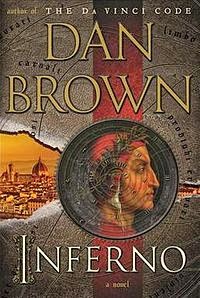
http://en.wikipedia.org/wiki/Inferno_(Dan_Brown_novel)

Some may have heard of the recent Dan Brown novel, Inferno, which is based on the first volume of Dante Alighieri's Divine Comedy. In it, Robert Langdon travels about Italy to finally discover that the Catholic Church is ruining the world by encouraging overpopulation! Once again, Dan Brown drops "secret knowledge" on millions of unenlightened westerners (stay tuned for another post on JPII vs. The Da Vinci Code).

Instead of giving Dan Brown undeserved attention in this post, my focus is much moreso on Dante Alighieri, JPII, and the Virgin Mary. Most notably from JPII's comments and meditations on Dante in placing Mary as the apex of the Divine Comedy, especially in his Address: "At a Reading of Dante's Divine Comedy 08/31/97". Rather than focus on hell, as Brown does in his Inferno, JPII chooses to emphasize "Paradiso", and more specifically, Mary's overarching influence from heaven:

In the grand scene presenting man’s search for salvation, the Poet assigns a central place to Mary, 'humble and higher than creation', the familiar and sublime image of the woman who sheds light on the parable of the final ascent, after having supported the traveler’s tiring journey. What a consoling vision! Almost seven centuries later, Dante’s art evokes lofty emotions and the greatest convictions, and still proves capable of instilling courage and hope (http://www.fjp2.com/us/john-paul-ii/online-library/speeches/13833-at-a-reading-of-dante-alighieris-qdivine-comedyq-august-31-1997)

"Vision" is the word used to describe Mary in Paradiso, much like that of St. John the Evangelist in the book of Revelation. Furthermore, it is a "consoling vision", in stark contrast to the despair of the Inferno and difficult climb of Purgatorio.

Recall that just prior to Paradiso, Dante presents Beatrice as the crown of beauty, truth, and goodness. In a way, Beatrice prepares Dante to meet Mary, helping him to repent of his sins in the last few cantos before his ascent to "Paradiso". JPII captures Dante's joy to finally meet the Virigin Mother, calling her both "familiar and sublime" as Dante finishes his "tiring journey". It is as though Dante had already encountered aspects of Mary in Beatrice, explaining the 'familiarity'. Likewise, the 'sublimity' requires purity of heart to behold, which is why Dante had to repent of all that was not worthy of meeting the Theotokos. In notes on this topic, the University of Texas at Austin provides a detailed explanation of Dante's painful purification in his Purgatorio:
http://danteworlds.laits.utexas.edu/purgatory/index.html

Examples of chastity and lust are provided by the penitents themselves as they walk within a raging fire on the seventh and final terrace of Purgatory. The spirits--at least those who desired partners of the opposite sex--cry out words spoken by Mary at the 'annunciation' when she asks how, not having sexual relations with a man (virum non cognosco [I know not man]), she will give birth to Jesus (25.127-8; Luke 1:34) [http://danteworlds.laits.utexas.edu/purgatory/09lust.html].

Mary is understood to be the example par excellence of those who upheld chastity and temperance in their lifetimes. In turn, Mary gives way to the rightful Lordship of her Son, as was so often communicated by JPII with his motto "totus tuus". His intention in devoting himself to Mary was precisely to be given over to Jesus, and although not explicitly stated by Dante in the Divine Comedy, this same theme is implied in the text.

Perhaps that is what is so effective in Dante's work, namely, the implication of God's presence throughout the epic poem but in such a hidden and surprising way as to attract both believers and non-believers into reading it. I remember friends reading, by their own free will, the Inferno in highschool because they said it was both "scary and fascinating". Little did they know that it touched on the faith and virtue needed for them to meet their Maker at the end of their days! Furthermore, the poem humbly places readers within the worldview of 'man's search for salvation', making some mistakes with Limbo and political judgments, but by and large staying true to Catholic understanding of the afterlife, especially in regard to the purification for sins before the beatific vision of God. Lastly, it successfully synthesized all of classic literature prior to Christ into a common patrimony (personified by Virgil) pointing to the revelation of the Blessed Trinity and salvation.

I want to fill in a bit about Dante's political life, to help explain some of the mistakes he made with the poem--but not so as to discount its relevance and rightful place in Catholic history. The condensed biography of Dante Alighieri is simply the following list (exerpted from New Advent--http://www.newadvent.org/cathen/04628a.htm):

1) He fell in love with a child-hood friend, Beatrice, at nine. She was his muse even after her death in 1290, inspiring his first poem in 1294.
2) He began a military/political career in 1295 with the pro-papal Guelf party
3) He marries and has four children
4) The Guelfs split in two in 1300, into "whites" (pro-papal) and "blacks" (anti-papal) with Dante joining the latter
5) He is exiled from Florence, but later hailed poet laurete of Italy
6) Dies at Ravenna, 1321

Compare Dante's life choices amidst political upheaval, war, and papal corruption with Karol Wojtyla! In some ways they are similar: poets, citizens of countries at war, etc. Yet, they are very different as well: married man vs. priest, soldier vs. laborer, anti-papal vs. pro-papal. Imagine if Wojtyla had been outspoken in his criticism of Pope Pius XII for being neutral during WWII! Or for not doing more for refugees in the Vatican! It wasn't as though there were insufficient reasons to question/accuse the Church during the second world war. He certainly had his "Virgil" to thank in both his father, captain Wojtyla, and mentor: Cardinal Sapieha. Yes, Karol Wojtyla took a narrower road to Paradise than Dante Alighieri--and that "made all the difference!"

To conclude then, in Dante Alighieri we have a Catholic genius not to be confused with Dan Brown's depiction in Inferno, but more appropriately ranked with the caliber of JPII. Likewise, we have two men with lifelong devotions to the Blessed Virgin Mary, meeting precisely in their love of her as the crown of creation.

I deeply hope that Dante is resting in peace with the assurance of an ecstatic gaze on the beatific vision, including the beauty that created his beloved Beatrice.

*Update (This from a series on Purgatorio by Dreher):
Dante, like all the medieval intellectuals, believed in what you might call “number mysticism.” In the premodern metaphysical vision —a vision still embraced by philosophical Traditionalism; a very good, easily accessible presentation of this is in Prince Charles’s book Harmony — anyway, in the premodern metaphysical vision, the entire cosmos is shot through with divinely given order, and meaning. We can read the order and harmony of the world, and see in this the expression of God’s nature. This is a topic that is far too rich and complex to get into in this blog series. The important thing to know is that Dante incorporated this understanding deeply into the bones of the Commedia. Writes Prue Shaw:

Dante’s is a world where the number three seems to be a key to understanding reality in many of its fundamental aspects. The numerical pattern three-in-one is built into the very structure of things, a medieval version of what modern thinkers call a “fractal.” (Fractals are self-similar patterns: at whatever degree of magnification one uses, one sees the same pattern reappearing.) It is perhaps not surprising that Dante used the principle of three-in-one to structure his imagined world and the poem which celebrates it. What is astounding is how successfully he did so.

The Commedia as a product of human making — a man-made work of verbal art — was designed by Dante to embody the three-in-one principle. With satisfying symmetry, it does so both in its overall structure and in its individual component parts. The poem has three sections — Inferno, Purgatorio, Paradiso — which constitute one poem, the Commedia. The basic building black from which it is constructed is the terzina, or tercet, a single metrical unit consisting of three lines. Dante invented this metrical scheme, and by so doing made three-in-oneness a part of the very fabric of his poem.

There’s more. The tercet form Dante invented goes like this: aba bcb cdc. The entire poem is written this way; you can’t tell it in the English translations, but in the Italian original, the entire poem is linked in a chain of verse — this to express Dante’s metaphysical view that all reality is linked in a great chain of being. The pilgrim is learning how important it is to pray for the souls of the dead in Purgatory because we are all part of one community, one reality, in God. By extension, he’s learning how the human community is supposed to be united in harmony, by love, because we really are all brothers.

But there’s more to Dante’s structuring. Again, Prue Shaw:

The mirroring of patterns in the poem from overall structure to individual metrical unit goes even further. Because each line of the poem has eleven syllables, each tercet has thirty-three syllables, matching the thirty-three cantos in Purgatorio and Paradiso. Inferno has an extra canto, which functions as a preface to the whole work, making a total for the poem of one hundred cantos, the perfect number. (The perfect number is ten squared, ten itself being a perfect number, or so medieval mathematicians thought, because it is the sum of 1 + 2 + 3 + 4. So the poem is not just a verbal artifact but a mathematical one as well.

Cont'd
The medievals believed in the concept of habitus, which is to say the personal culture and worldview one carries in one’s head as a result of how, where, and among whom one lives. Our habitus shapes us; even when we have left people in our habitus behind in our journeys through life — and indeed, in the Commedia, Dante is propelled relentlessly forward, and repeatedly told in Purgatorio not to look back — the people from Dante’s habitus as a Tuscan of the High Middle Ages are unavoidably part of his habitus, even if they define the sins he’s trying to overcome. Dante the pilgrim has to go down into Hell so he can go up into Heaven. We pilgrims may have to go back to our past in some sense, to confront our personal histories, so we can go forward to a future that is more holy and peaceful.

Cont'd
"What Virgil offers us, symbolically, is a circle instead of Dante’s line, with man’s soul trapped in an inexorable cycle of births and deaths, undergoing an endless chain of one 'inferno' and 'purgatorio' after another. 167
Michael C. J. Putnam Materiali e discussioni per l'analisi dei testi classici No. 20/21 (1988), pp. 165-202
I will look most closely at Dante’s version of Anchises, as they take shape in Paradiso 15 and especially in Purgatorio 30, in the characters of Cacciaguida and Virgil. Dante’s Virgil, like Aeneas’ father, can accompany his protégé only so far in this complex quest. I will examine in particular the parallels and differences in these limitations set to the father-figure as guide. 169

The irony is, of course, that Aeneas’ action is one of the most Illiadic moments of the epic with Turnus wearing Pallas’ sword-belt standing in for Hector in Patroclus’ armor…The ending of the Aeneid lacks the fulfillments that bring the Illiad to a conclusion, the ransoming of Hector’s body and the lamentations and funeral that complete at once a life and a poem. 177

As we move from Aeneas’ epic and Virgil’s text to the Divina Commedia we change from tragedy of pagan darkness (and, I would add, from the dissonances implicit in Virgil’s pessimistic cyclicality) to the ‘comedy’ of Christian revelation (the Commedia as a type of Novum Testamentum) and the grace of its splendid acts of completion, in the concentrated focus on the Paradisal rose. We make the larger transitions metonymically in the smaller textual metamorphoses of Cacciaguida from Anchises (and, in part, the Sibyl) to God the Father, and of the pilgrim from Aeneas, entrapped finally in resentment, to a Christ figure who will suffer immediate earthly ‘inferno’ only to perform his own act of redemption for Florence by the endurance of his poetry." 190

Tuesday, October 22, 2013

October 22nd Memorial

Some good information from Dr. Mulholland of Benedictine College on Blessed John Paul II:

Oct. 22, the liturgy offers us the memorial of Blessed John Paul II. It will be the last time this optional memorial is celebrated before his canonization this April...John Paul II’s first encyclical, “The Redeemer of Man,” was central to his thought and his whole trajectory as Pope. The pastoral initiatives of the Jubilee Year of the Redemption, the Jubilee of the New Millennium, the encounters with young people and so many papal trips and visits, all revolve around the understanding of human beings in their greatness and in the mystery of sin and the Fall. At the core of John Paul’s writings is the deep truth of the reality of man’s plight and his radical need for a Redeemer...John Paul the Great’s second encyclical was an extended meditation on God the Father as “rich in mercy.” His canonization date, Divine Mercy Sunday, recalls his push for this feast day, (as had been requested by St. Faustina whom he canonized) and his dying on the eve of Divine Mercy Sunday in 2005. God, “rich in mercy” is mentioned in the opening prayer of the Mass celebrated for Blessed John Paul...John Paul’s encyclical which followed upon the fall of communism, Centesimus Annus, has a whole chapter on man as “the way of the Church.” The missionary impulse goes way beyond preaching sermons. God’s Word must become flesh as well in just political and economic systems. In October 1978, the former Karol Cardinal Wojtyla had begun his pontificate telling all “Be not afraid” of opening wide the doors to Christ, the doors of our hearts but also the doors of political and economic systems. For Blessed John Paul II, living a life where we all help everyone we meet to be better is both a virtue and a social principle: solidarity...(zenit.org/articles/blessedjohnpauliislegacy/)

All in all, a few snippets to back up my posts on Karol Wojtyla's legacy. For more information on the above from my own blog, please search "JPII and Redemption", and "JPII vs Liberation Theology"

Blessed John Paul II, ora pro nobis!


Monday, October 14, 2013

Dies Domini, "Lord of the Sabbath" and JPII

To preface this post, it's necessary to point out that I have lived with my new family in a Jewish Orthodox neighborhood for the past year. There, a rabbi lives a few blocks away from us, and we are surrounded by young families who routinely set aside Friday evening to Saturday evening as their "shabbat".

Interestingly, Karol Wojtyla grew up in Wadowice with similar circumstances as my family's current neighborhood described above (please see my previous post: Catholics and Jews for further reference). Suffice it to say, that the Catholic/Jewish neighbohood Wojtyla grew up in made a major impression on him, shaping his understanding of Judeo-Christianity worldwide. Again, not because he went out of his way to seek such a worldview, but because the relationships he was involved in with friends like Jerzy Kluger formed him as such.

The Apostolic Letter on the Lord's Day or "Dies Domini" explores the Church's need to re-discover the cultural catalyst of celebrating the Lord's resurrection each Sunday! I will draw largely from the text of Dies Domini, as well as a Master's thesis for Sacred Heart Seminary written by Nico Angleys on the same topic. Together, these sources do not merely conclude that the jewish understanding of Sabbath in anticipation of the messiah is enough. Instead, they conclude that the Messiah has already come in the Person of Jesus who rose from the dead three days after celebrating the passover, wherein he instituted the Eucharist, and the day on which he rose is the same Sunday we celebrate! Therefore, Sunday has replaced Saturday as sabbath, and ultimately become "the day of the Lord".

Within the first few paragraphs of his letter, JPII admits to such a strong impression of "the Lord's Day" from his early days as a Bishop in Poland:
Many of the insights and intuitions which prompt this Apostolic Letter have grown from my episcopal service in Krakow. I see this Letter as continuing the lively exchange which I am always happy to have with the faithful, as I reflect with you on the meaning of Sunday and underline the reasons for living Sunday as truly "the Lord's Day", also in the changing circumstances of our own times. (Dies Domini #3)

He goes on to point out that for numerous reasons, including: economic instability, secularism, persecution, etc. the practice of observing the holiness of Sunday has been gradually declining since the early 1900s. The fact that the early Church, he says, had to literally shed blood for the sake of observing the Lord's Day on Sunday should make us grateful for the little persecution we have in the same regard today. JPII says of Justin Martyr and others under the persecution of Diocletian: "many were courageous enough to defy the imperial decree[banning Eucharistic assembly] and accepted death rather than miss the Sunday Eucharist." (ibid, #46) As for the history and logic behind Sunday as the given day for celebrating the Lord's Resurrection, I will summarize his points below:
1) Jesus rose from the tomb on Sunday, "first day after the sabbath" (Mk 16:2;Lk 24:1;Jn 20:1)
2) "Sunday" was originally named by the Romans as 'day of the sun'; Christianized by the early Church (and met with persecution)
3) Accoring to St Gregory of Nyssa and Maronite Liturgy, the early Christians of Jerusalem viewed the Jewish "shabbat" and Christian Sunday as two "brother days" (De Castiatione 46), with Sunday taking the highest place on account of the Lord's resurrection on that day
4) The necessity of conscience to participate in Eucharist on Sunday

Late in the Apolostolic Letter, JPII references the "Lord of the Sabbath" (Mk 2:28) as the authoritative principle in transferring the Jewish day of rest to the day of the Lord's Resurrection on Sunday. That is to say, Jesus as the Messiah of Israel, has the authority to be "Lord of the Sabbath" on Sunday, rather than Saturday, because he proved his authority by rising from the dead on that day! Nico Angleys' thesis brings this idea to the fore in his introductory paragraphs of "Keeping the Lord's Day Holy" by linking the decalogue, the new evangelization, and the authority of Jesus:
Time belongs to God. In his eternal and infinite wisdom, he gave us a command pertaining to time: “Remember the sabbath day, to keep it holy” (Exodus 20:8). Jesus upholds this command and is given the title “Lord of the Sabbath” (Mark 2:27-28, Matthew 12:8, and Luke 6:5). In the Great Commission, Jesus tells his disciples: “teach them [the disciples of all nations] to observe all that I have commanded you” (Matthew 28:20). Thus, in our day, the work of evangelization involves teaching the third commandment and declaring the blessing of sanctified time to a culture fixated on time. (part 1, Introduction to "Keeping the Lord's Day Holy")

Nico Angleys effectively points to Christ as central to the Lord's Day, fittingly celebrated on Sunday as stated above. He quotes from Dies Domini in regard to the linkage between Jerusalem of the old covenant and the New Jerusalem under the Messianic reign of Jesus:
In one of the concluding paragraphs of Dies Domini, he writes that “Sunday has the additional value of being a testimony and a proclamation” and then launches into an inspiring crescendo of reasons for this proclamation that culminates in the unending Sunday of the heavenly Jerusalem described in Revelation 21. (Part 1, #2 "Proclamation" of "Keeping the Lord's Day Holy")

Lastly, both JPII and Nico Angleys agree that Jesus completes the old covenant remembrance of the sabbath by A)Instituting the Eucharist on the night of Passover [the event where God delivered his people with the blood of a lamb] B) re-creating the order of nature by rising from the dead on Sunday [restoring to grace the fallen creation of God's creation account in Genesis].

What does that all mean practically? Or how does the layperson incoporate the practice of keeping Sunday (Saturday night through Sunday evening) holy besides going to Mass? JPII gives a few examples:
1) recitation of Saturday evening Vespers in family homes or local parish
2) dialogue between parents and children, especially thankfully remembering God's work in their lives
3) Catechesis for preparation to enter into the Mass, receive the Eucharist
4) family meal
5) Pilgrimage to nearby shrine

In today's culture, these examples go a long way with evangelization. "Fighting for Sunday" may become more intense as things continue to disintegrate, but having the teaching in place from JPII and others will strongly reinforce efforts to live God's law of love.